


Why Modular Construction Is Gaining Attention—And What’s Holding It Back
- nikki

- Apr 16
- 2 min read
As housing demand continues to rise, more people are looking for alternative ways to build. Modular construction has become part of that conversation—and for good reason.
But despite its advantages, modular housing still isn’t as widely used as many expected.
So what’s holding it back?
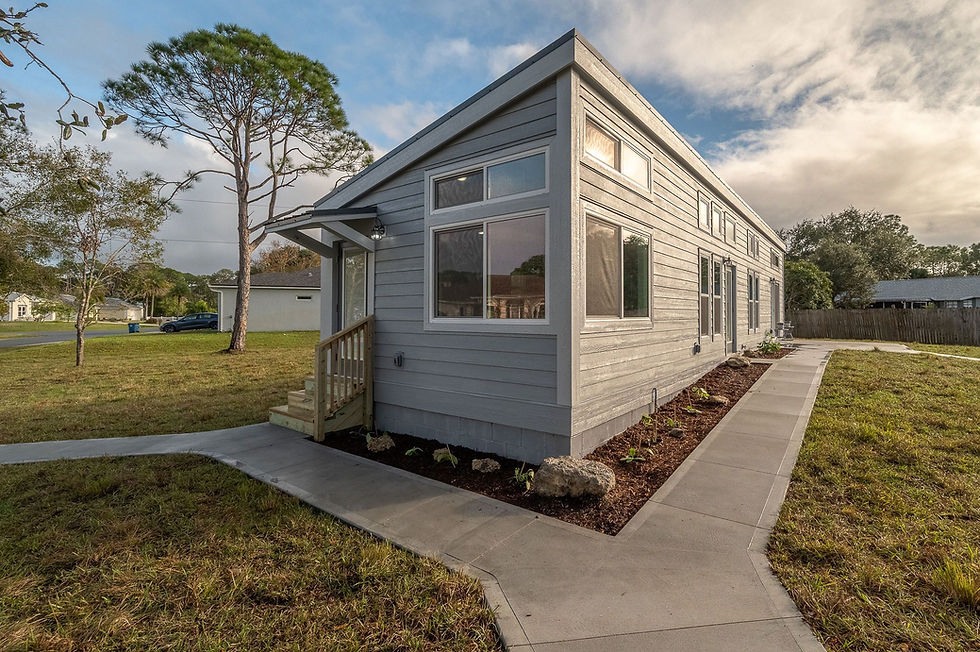
Understanding the Confusion Around Modular Homes
One of the biggest challenges is simple: misunderstanding.
Modular homes are often grouped into the same category as mobile or manufactured homes. While both are built off-site, they are not built the same way—and they don’t follow the same standards.
Modular homes are constructed to state and local building codes, including the Florida Building Code, and are engineered for the environment where they will be placed.
That distinction matters—not just for perception, but for how the home performs over time.
Modular Construction Offers a Different Approach
Modular homes are built in a controlled indoor environment, which helps reduce delays caused by weather and allows for a more consistent construction process.
This approach can support:
More predictable timelines
Better quality control
Reduced exposure to environmental factors during construction
In Florida, where weather can impact traditional builds, this can make a meaningful difference in how projects move forward.
The Bigger Challenge Isn’t the Build—It’s the Process
While modular construction can improve efficiency, the real challenge often lies in everything surrounding the build.
A modular project involves more than fabrication. It requires coordination between:
Local zoning and permitting
Site preparation and foundation work
Transportation and delivery
Utility connections and inspections
If these steps aren’t aligned, delays can still happen—just in different parts of the process.
Why This Matters in Florida
Building in Florida comes with specific requirements—from wind load ratings to permitting processes.
Modular homes built to the Florida Building Code are designed with these conditions in mind. But successful delivery depends on more than engineering—it depends on how well the project is planned and executed from start to finish.
The Movable Roots Approach
At Movable Roots, we focus on more than just building modular homes—we focus on how the entire project comes together.
Our approach includes:
Building to Florida code and wind ratings
Coordinating site readiness before delivery
Managing logistics from the warehouse to set day
Supporting clients through the full process
Because modular construction works best when everything—from design to delivery—is aligned.
Final Thoughts
Modular construction continues to gain attention as a practical way to build—but its success depends on more than speed.
It comes down to understanding what modular really is, and making sure every step of the process is handled with care and coordination.
👉 Thinking about building in Florida?
Reach out to learn more about modular homes and what may be possible for your property.


